Project bottleneck: Identify, fix, and prevent delays


Summary
Remember the last time your project got delayed? Maybe you were waiting for feedback, dealing with an old system, or managing reviews and approvals. Most delays come down to one thing: a bottleneck.
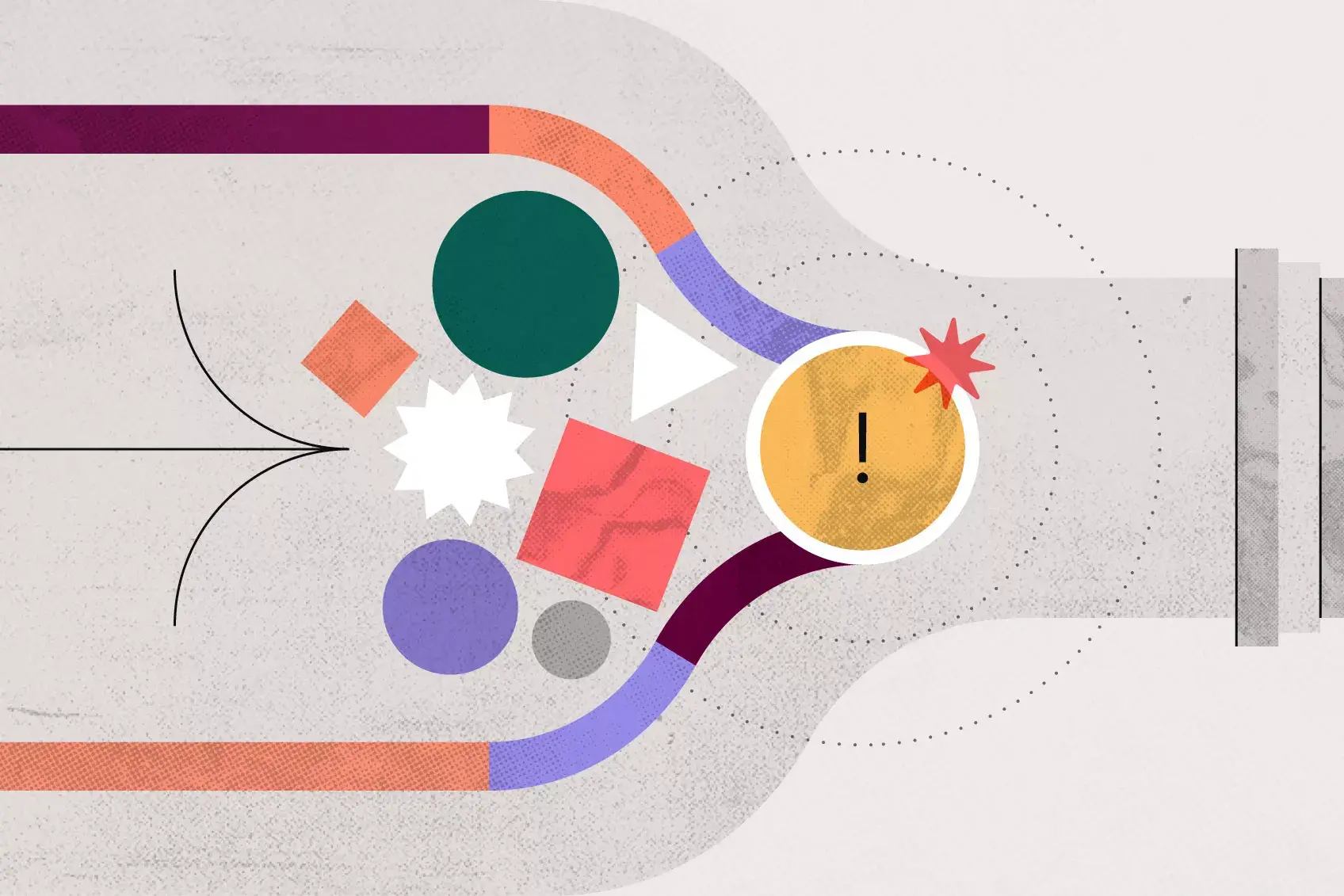
Just as the neck of a bottle slows the flow of water, a bottleneck in project management slows down your workflow. In manufacturing, bottlenecks are easy to spot, such as a slow machine or missing materials. In project management, they can be harder to find and fix.
In this article, we'll cover what exactly a bottleneck in project management is, the most common causes, how you can identify one, and what you can do to contain and prevent bottlenecks when they occur.
Optimizing your tech stack for the AI era
From security risks to productivity loss, app sprawl may be costing you more than you think. Our latest guide reveals the true impact of an oversized tech stack and provides strategies to optimize your IT spend. Don't let hidden costs hold you back:
What is a bottleneck in project management?
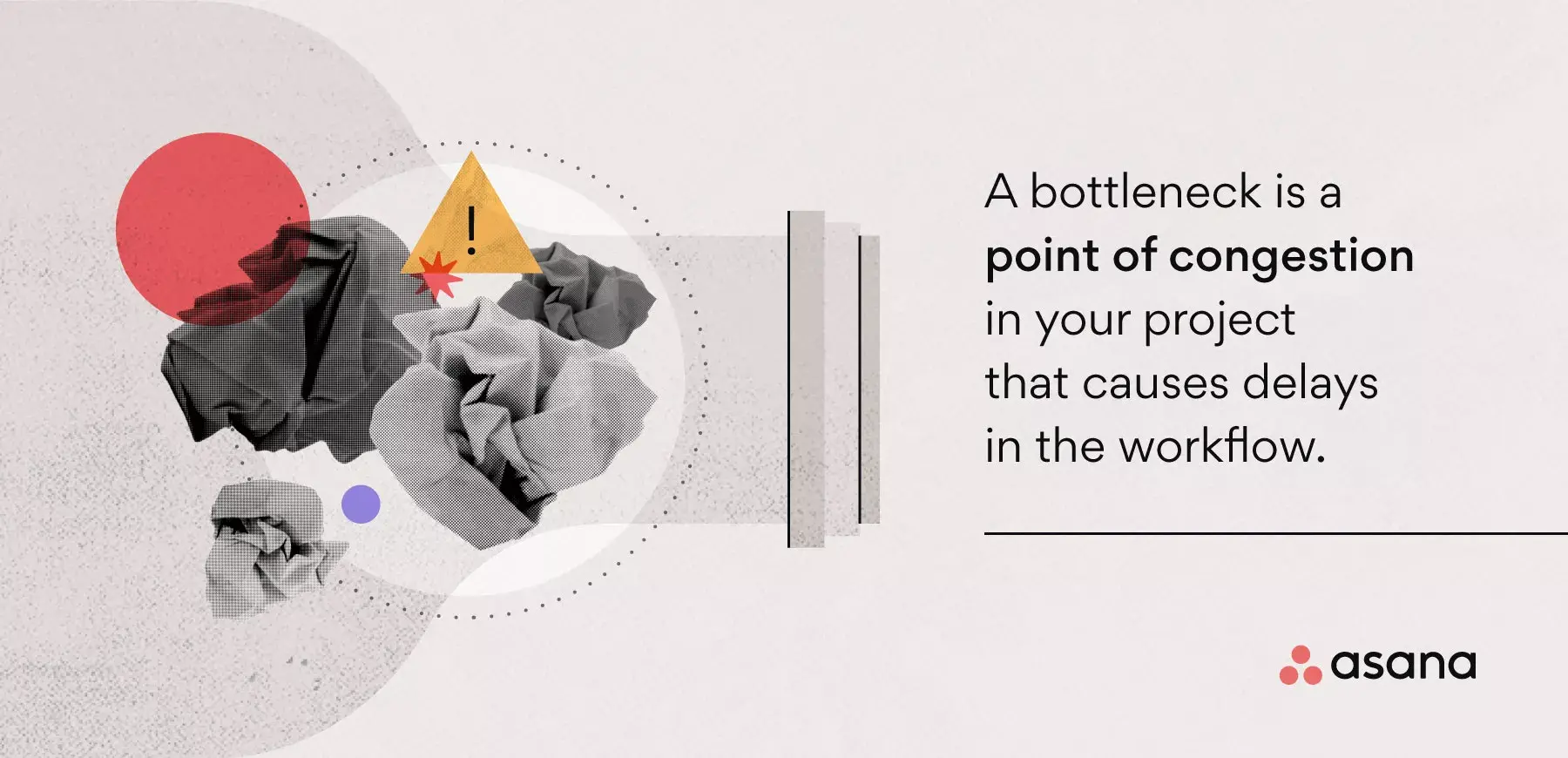
A bottleneck in project management is a point where limited capacity slows or stops work, causing delays for the whole project. Bottlenecks can happen at any stage, like a slow approval, an overloaded team member, or an outdated tool.
There are two types of bottlenecks in project management:
Performer-based bottlenecks happen when a team member or the whole team can't keep up with the workload, usually because they lack resources or clear instructions—not because of poor performance. To fix this, talk with your team to find out what's in the way and consider hiring help, outsourcing simple tasks, or improving communication.
Systems-based bottlenecks: These happen when outdated or inefficient tools slow down your workflow, such as slow printers, manual archiving processes, or work management software that doesn't fit your project's needs. Upgrading to a more reliable system may be all you need to get your workflow back on track.
Performer-based bottlenecks | Systems-based bottlenecks | |
Cause | Team members lack the resources, clarity, or capacity to keep up | Tools or processes are outdated, slow, or poorly suited to the work |
Examples | Understaffed QA team, single approver on vacation, unclear task ownership | Slow software, manual data entry, disconnected tools |
Common fix | Redistribute workload, hire support, improve communication | Upgrade tools, automate repetitive steps, streamline processes |
Figuring out which type of bottleneck you have is the first step to fixing it. Once you know if it's systems-based or performer-based, you can look closer to find the exact cause.
Common causes of project bottlenecks
Knowing why bottlenecks happen is as important as spotting them. Most projects face the same few bottlenecks, even though each is unique.
Limited resources and capacity constraints: When your team doesn't have enough people, time, or budget to handle the workload, tasks start piling up. A single overloaded team member can create a ripple effect that delays the entire project.
Poor workflow design: If your processes have unclear handoffs, unnecessary approval steps, or poorly defined roles, work can get stuck between stages. Simplifying your workflow and clarifying who owns each step can help keep things moving.
Communication breakdowns: When teams aren't aligned on priorities, timelines, or expectations, delays are almost guaranteed. Missing information, unanswered questions, and siloed teams all contribute to communication-related bottlenecks.
Inefficient tools and outdated systems: Software that doesn't meet your project's needs, whether it's slow, hard to navigate, or lacking key features, can drag your whole team down. The right work management tool should make collaboration easier, not harder.
Unbalanced workloads: Even if your team has enough capacity overall, bottlenecks can form when work isn't distributed evenly. If one person or team is handling a disproportionate share of tasks while others have bandwidth, the overloaded area becomes a chokepoint.
After you find the root cause of your bottleneck, you can choose the best way to fix it. Here’s how you can do that.
How to identify bottlenecks
A bottleneck analysis, also known as a root cause analysis, is the best approach to identifying bottlenecks and finding ways to solve them. There are three steps you'll have to take to identify your bottleneck, find solutions, and monitor performance.
Step 1: Map out your processes and identify bottlenecks
The best way to both identify and prevent bottlenecks is to map out your workflows. You can do this using a work management software like Asana, which lets you view your project in different ways, such as a Kanban board, a Gantt chart, or a task list.
Another commonly used bottleneck analysis tool is the fishbone diagram. Also known as Ishikawa diagram, this visual representation of your project is the perfect brainstorming tool for problem solving.
Read: Ask “5 Whys” to get to the root of any problemIn a fishbone diagram, the head shows the issue or bottleneck, and the ribs show different categories and tasks. Mapping your process this way makes it easier for your team to find the root cause.

Note that it's easy to get lost in your fishbone diagram. Your bottleneck may have more than one potential cause, so view this diagram with caution and avoid getting lost in a rabbit hole.
To create a fishbone diagram in Asana, you can use the Lucidchart integration. This allows you to create the diagram, share it with your team, and save it for future review.
Once you've visualized your processes, your team will have to study them closely and review them for strengths and weaknesses. You may find that work is piling up because your quality team is understaffed (performer-based) or that an old software continuously loses important data (systems-based).
Step 2: Implement solutions
Once you know the cause of your bottlenecks, you can determine how to address them. This may include creating a detailed action plan, delegating tasks to team members, and increasing capacity utilization by allocating resources for your project.
Backlogged work due to an understaffed team: If your team is overloaded, look for ways to lighten the load, whether that's outsourcing simpler tasks, borrowing support from another team, or bringing on temporary help. For future projects, consider expanding your team or building more time into the schedule to avoid the same bottleneck.
Client response times are too slow: Waiting on client feedback is one of the most common causes of delivery bottlenecks. Schedule a meeting to align on the best way to share deliverables and collect feedback, whether that's batching reviews or agreeing on a faster communication channel.
Outdated project management software causes issues: Every project manager can probably agree: outdated software is an absolute nightmare. Whether it's not auto-saving your progress, difficult to navigate, or slow to load, a quick ROI analysis may be all you need to justify upgrading to a more reliable tool.
Your team does a lot of duplicate work: Duplicate work doesn't just slow down the process; it also causes friction and frustration between your team members. Use a work management tool to clearly outline who's responsible for what, define dependencies, and assign tasks as you go.
Micromanagement slows down the process: A manager or stakeholder who keeps interfering with the project will delay it. In this case, have a meeting with the person to discuss setting boundaries and remind them that delegating work and trusting your team is part of what will make both the project and your team successful.

As an organization grows, communication starts to bottleneck. At Hope for Haiti, we’ve seen those inefficiencies hurt us: when we can’t run like a well-oiled machine, we’re not serving as many people as we could be—and it’s our responsibility to improve upon that.”
After you put your solution in place, the next step is to monitor and see how well it works.
Read: 8 tips for doing macromanagement the right wayStep 3: Evaluate performance
You need to track and review your action plan to make sure you’ve managed the bottlenecks. Compare your project’s progress, quality, and speed to how things were before you made changes.
This review also gives you useful insights for handling bottlenecks in the future. In larger projects, bottlenecks are almost certain, so focus on planning ahead and managing them quickly. Mapping your workflows lets your team work on other tasks while the bottleneck is being fixed, so progress doesn’t stop.
Read: 6 project constraints and how to manage them for project successHow to contain a bottleneck once it's happened
Depending on the complexity of the bottleneck, you may be able to address it quickly by reassigning team members or allocating more resources to a specific stage of your workflow. However, sometimes a bottleneck will require more attention to resolve. If you don't address a bottleneck as soon as you identify it, the consequences can be costly and draining.
Here's how you can contain a bottleneck once it's happened.
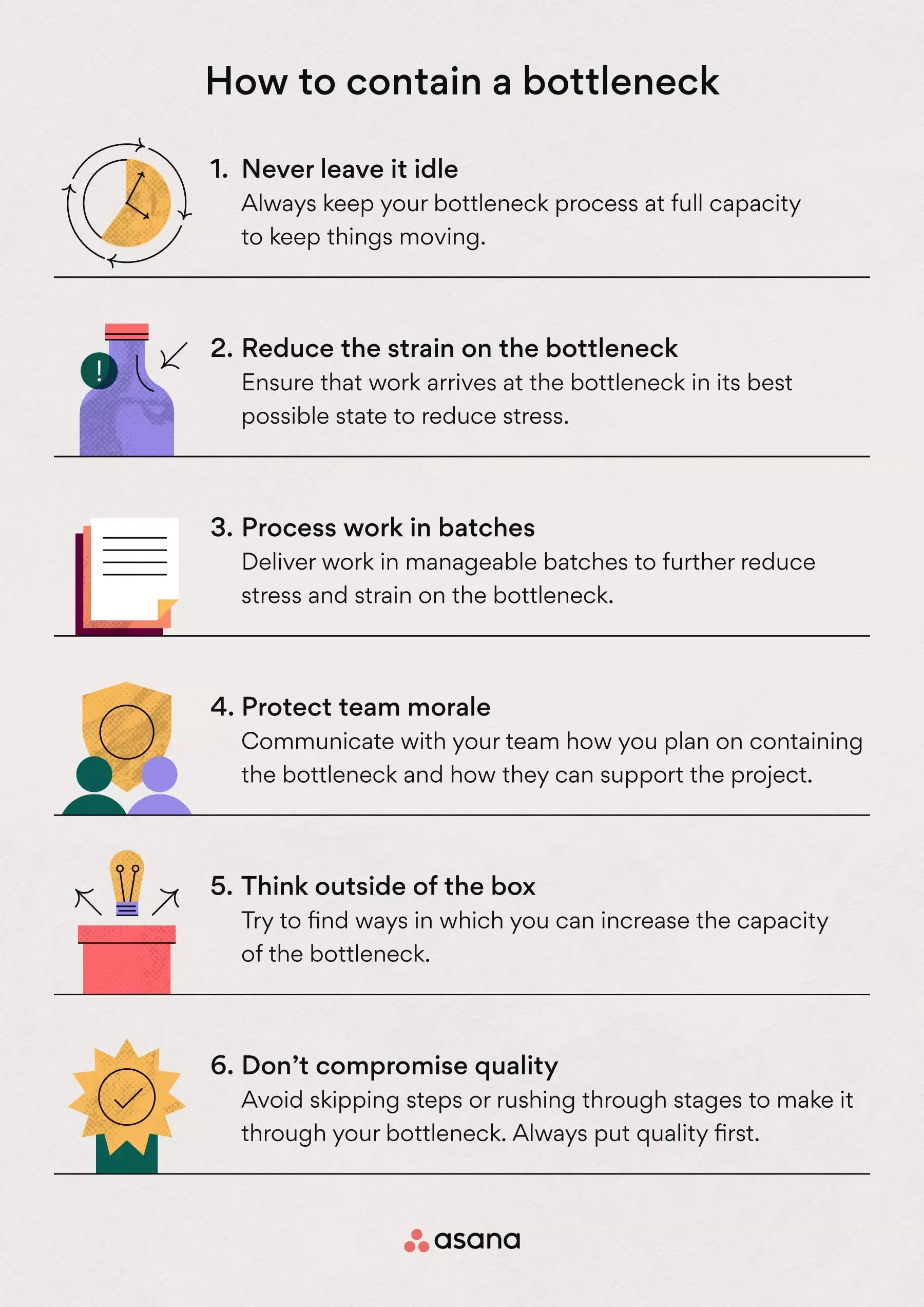
Never let a bottleneck sit idle. Reducing the work going through it might seem helpful, but it can actually slow your project down even more. Keep the bottleneck working at full capacity while you solve the problem as quickly as possible.
Reduce the strain on the bottleneck by making sure work arrives in good shape. For example, if a manager reviews documents, make sure they are as error-free as possible so the review goes faster.
Process work in small batches if it helps reduce strain on the bottleneck. Keep batch sizes small so it’s easier to get through them without adding stress.
Protect team morale: When things get messy, your team can lose focus, trust, and motivation. It's important that you effectively communicate to your team how you plan to address the bottleneck and how they can support the project in the meantime.
Be creative. If you can, increase the bottleneck’s capacity. For example, if one manager is slow to review paperwork, maybe another manager can help speed things up.
Don’t sacrifice quality. Skipping steps or rushing might save time now, but poor quality can mean redoing work, losing clients, or damaging your team’s trust.
The key is to avoid downtime. If your team has nothing to do, frustration grows, and your project takes even longer. Keep work moving and involve your team in solving problems.
How to prevent bottlenecks in future projects
You can’t always avoid bottlenecks, but you can reduce how often they happen and how much they slow your team. Here are five ways to stay ahead.
Plan thoroughly and assess risks early: Before your project kicks off, map out the full scope of work, identify potential risks, and build contingency plans. The more clearly you define timelines, roles, and dependencies upfront, the less likely you are to hit unexpected delays.
Balance resource allocation across your team: Uneven workloads are one of the fastest paths to a bottleneck. Use resource management tools to distribute tasks based on each team member's capacity and expertise, so no one person becomes a chokepoint.
Establish clear communication channels: Make sure your team knows where to find information, how to flag blockers, and who to go to for decisions. A shared work management platform can centralize updates and reduce the back-and-forth that often causes delays.
Monitor performance regularly: Check in on project progress frequently and track whether tasks are moving through each stage at the expected pace. Early visibility gives you time to adjust before small slowdowns become major roadblocks.
Build buffer time into your schedule: Even the best plans encounter surprises. Adding buffer time between key milestones gives your team room to absorb unexpected delays without derailing the entire project timeline.
It’s easier to prevent problems than to fix them. By making these habits part of your planning, you’ll spend less time putting out fires and more time moving your projects forward.
Use project management software to manage bottlenecks
Even with the best planning, bottlenecks still happen. When they do, bring your team together and focus on finding solutions to manage the extra work.
With the right tools, you can keep bottlenecks to a minimum even in an Agile environment. Create timelines or Kanban boards for your projects so your team always has a visual representation of their workload and can easily adjust tasks, dependencies, and due dates in real time.
Ready to give your team the visibility they need to spot and solve bottlenecks faster? Get started with Asana and keep your projects on track.
Create a critical path method template